
EFT Articles
Wandering in the Minefield of Polyvagal Theory
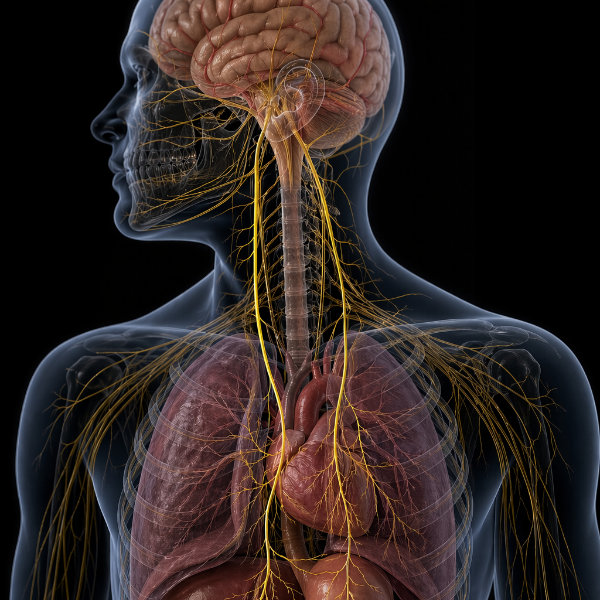
If you’ve spent any time in therapy, yoga studios, somatic healing circles, or trauma-informed workplaces over the past two decades, you’ve probably heard someone talk about being in a “dorsal vagal shutdown” or finding a “ventral vagal state of safety.” These terms come from Polyvagal Theory (PVT), a framework developed by neuroscientist Dr. Stephen Porges in the 1990s that has become enormously influential in trauma treatment, mental health, and wellness culture broadly.
But just recently, February 2026, a landmark paper signed by 39 neurophysiologists, scientists who study how the nervous system works at a precise, biological level, declared that Polyvagal Theory is, in their words, “untenable.” That’s a strong word in science. It doesn’t just mean questionable. It means the core claims can’t be supported by the evidence.
So what does this mean for the millions of people whose healing has been shaped by this theory? And what does it mean for practitioners; the therapists, bodyworkers, coaches, nurses, social workers and others who share insights with their patients, clients and students who use polyvagal ideas every day in their work?
This article will hopefully help walk you through the controversy in plain language, explain what Polyvagal Theory actually says, and then zoom out to offer a broader map of nervous system models that can support trauma-informed practice, regardless of how the scientific debate ultimately resolves.
The Basic Idea
Stephen Porges developed Polyvagal Theory as an attempt to explain why our bodies respond to stress the way they do, and why those responses so often feel involuntary and beyond our conscious control. He proposed a mega theory on the science behind feeling safe.
At the heart of PVT is a nerve called the vagus nerve. The vagus nerve has reached such a state of ubiquitous usage that to have not heard about its importance is isolated to someone who simply finds a way to have lived without any social media. It is a long, wandering nerve (the word “vagus” is Latin for “wandering”) that connects your brain to your heart, lungs, stomach, and many other organs. It’s a central highway of the autonomic nervous system, which is the part of your nervous system that runs your body’s automatic functions: heartbeat, digestion, breathing rate, immune response, and more.
Porges proposed that this nerve has two distinct branches that evolved at different points in evolutionary history, and that these two branches create three distinct states the nervous system can operate in:
- The Ventral Vagal State (“Safe and able to Socially Engage”) This is described as the state of calm, connection, and openness. When your nervous system detects safety, via a system that Porges refers to as “neurocewption,” this branch activates. You feel more present, engaged, able to listen, think clearly, and connect with others. Your voice has warmth, your face is expressive, your heart rate is steady. This is the state most associated with well-being and healthy relationships.
- The Sympathetic State (associated with “Fight or Flight” responses) When the nervous system perceives danger, it mobilizes for action. Heart rate increases. Muscles tense. Breath quickens. You may become hypervigilant and overly defensive and emotionally reactive. This is the threat-response system that most people are familiar with: the surge of adrenaline before a confrontation, the racing heart before a difficult conversation. With trauma, people can get stuck living here in a chronic state of activation and anxiety.
- The Dorsal Vagal State (“Freeze and or Collapse”) Porges argued that when danger overwhelms the nervous system, when fighting or fleeing is perceived as impossible, the nervous system shifts into an even more evolutionarily primitive response: shutdown. Heart rate drops. Energy drains. People may feel numb, disconnected, foggy, and immobilized. This is sometimes called “dorsal vagal shutdown,” and it maps closely onto what clinicians see in dissociation, freeze responses, and the kind of depression that feels like being trapped under heavy water.
Why This Theory Resonated So Deeply
For trauma survivors and the clinicians who work with them, PVT offered something extraordinarily valuable: a story that made involuntary responses make sense.
Before frameworks like PVT became widespread, people who froze during a traumatic event often blamed themselves. People who couldn’t “just calm down” felt broken. Therapists struggled to explain why “talking about” trauma wasn’t always enough to heal the effects of that trauma and why the body seemed to hold onto the experience in ways that words couldn’t reach.
PVT said: These aren’t character flaws. They’re biological responses. Your nervous system is doing exactly what it evolved to do.
That reframe, from “something is wrong with me” to “my nervous system is trying to protect me,” has been genuinely life-changing for many people. It’s compassionate language. It’s empowering. It explains the experience of trauma in a way that reduces shame and increases self-understanding.
PVT also inspired a generation of clinical techniques: co-regulation (healing through safe connection with another regulated person), rhythmic breathing practices, movement-based therapies, the careful use of voice and tone in therapeutic relationships, and much more.
This is why, when scientists started seriously questioning the theory’s biological accuracy, the trauma community paid attention.
The 2026 Critique
In January 2026, psychophysiologist Paul Grossman and 38 colleagues published a paper in the journal Clinical Neuropsychiatry titled “Why the Polyvagal Theory is Untenable.” This wasn’t a casual blog post. It was a formal, peer-reviewed scientific challenge signed by dozens of researchers, including cardiologists, neuroscientists and neurophysiologists from around the world.
Their core arguments, in a simplified translation goes something like this:
The anatomy described by PVT doesn’t hold up. Porges’ theory depends heavily on the claim that the two branches of the vagus nerve, the ventral and dorsal branches, work in the distinct, hierarchical way he describes. The critics say the actual anatomical and physiological evidence doesn’t support this clean division. The nerve’s functions are more entangled and complex than the theory suggests.
The evolutionary story is oversimplified. Porges proposes a specific evolutionary hierarchy, that the shutdown response is the oldest, the fight-or-flight response is next, and social engagement evolved most recently in mammals. The critics argue this neat evolutionary timeline isn’t well supported by comparative biology.
The predictions aren’t testable enough. Good scientific theories need to make specific, falsifiable predictions with claims that could, in principle, be proven wrong. The critics in the paper argue that PVT is vague enough that it can absorb contradictory evidence without updating, which makes it more of a story than a scientific model.
Their conclusion: PVT should not be taught as established science, particularly in clinical training programs, because it presents contested interpretations as biological fact.
As expected, Dr. Porges did not take this lying down and published a formal rebuttal in the same journal. His central argument: the critics are attacking a version of his theory that isn’t quite what he actually claims. He used the term “straw man arguments,” meaning they’re refuting a simplified, distorted version of PVT rather than the actual theory as he developed it.
He also pushed back on how the theory should be evaluated. He argues that it is a systems-level framework and it’s meant to explain patterns and relationships across multiple levels of biology and behavior, not to make precise claims about individual nerve fibers. Judging it solely by its neuroanatomical details is, he says, like judging a weather forecast wrong because it didn’t predict the exact location of every raindrop.
Porges also noted something important, that many of the clinical interventions that PVT inspired breathing practices with prolonged exhalations for example, co-regulation techniques, attention to voice and social cues, demonstrably work in clinical settings. Dismissing the framework because of disputed anatomy doesn’t automatically undermine the clinical value of these practices.
As of this writing, the debate remains unresolved. Grossman’s team has not yet publicly responded to Porges’ rebuttal. Both sides agree that more rigorous research is needed. Both sides believe they’re the ones reading the evidence correctly.
At this moment, all of the related science is genuinely unsettled. This isn’t a case where one side is clearly right and the other is engaging in denial. Serious, credentialed scientists disagree about fundamental claims.
Some experts are describing PVT in terms that are useful to consider: scientifically questionable but useful in practice.Perhpas it’s more like a helpful clinical metaphor than a validated biological law.
That phrase, a helpful clinical metaphor, is worth unpacking. A metaphor can be powerful and true at the experiential level even if it’s not a precise biological description. When we say someone’s heart is “broken,” we don’t mean the organ has fractured. But we’re pointing toward something real about grief. The question for practitioners is whether PVT’s map, even if some of the street names are wrong, is pointing toward real terrain.
Whether or not PVT’s specific anatomical claims survive scientific scrutiny, the question of how to understand the nervous system’s role in trauma remains central to effective healing work. Here is a broader toolkit of frameworks, each with its own strengths that practitioners can draw from.
1. The Classic Autonomic Model: Sympathetic vs. Parasympathetic
What it is: This is the foundational model taught in every biology class and medical school. The autonomic nervous system (ANS) has two main branches:
- The sympathetic nervous system accelerates the body; it’s the “gas pedal,” responsible for fight-or-flight responses.
- The parasympathetic nervous system decelerates the body; it’s the “brake,” responsible for rest, digestion, and recovery.
What it’s useful for: This model helps people understand that their body is not randomly malfunctioning. It’s following basic accelerator/brake logic. Anxiety is the gas pedal stuck on. Certain depression states involve the brake applied too hard.
Limitations: It’s binary and doesn’t fully capture the nuances of how trauma responses actually look, particularly the freeze/collapse response, which doesn’t fit neatly into either “gas” or “brake.”
2. Polyvagal Theory (With Eyes Open)
What it is: As described above — the three-state model of ventral vagal (safe/social), sympathetic (fight/flight), and dorsal vagal (freeze/collapse).
What it’s useful for: The clinical metaphors here are genuinely powerful. The concept that a therapist’s regulated nervous system can help regulate a client’s. This is commonly referred to as co-regulation, a term coined in 1996 by McAslin and Good, and has good empirical support even if the underlying vagal explanation is debated. The emphasis on safety as the prerequisite for healing has been transformative in trauma work.
Limitations: The specific neuroanatomy may be overstated. Practitioners should hold the framework loosely, using it as a map of experiences rather than claiming precise biological authority they don’t have.
Best practice: Use PVT’s language to describe experiences (“it sounds like your system went into a shutdown response”) rather than to explain mechanisms (“your dorsal vagus activated”). The former is clinically helpful; the latter appears to overstate the evidence.
3. The Window of Tolerance
What it is: Developed by psychiatrist Dan Siegel and widely used in trauma therapy, the Window of Tolerance describes an optimal zone of arousal in which a person can function, learn, and process experience without being overwhelmed.
- Hyperarousal (above the window): Panic, flashbacks, rage, overwhelm. The system is flooded.
- The Tolerance Window: Engaged, present, able to think and feel simultaneously.
- Hypoarousal (below the window): Numbness, dissociation, shutdown, disconnection.
What it’s useful for: This model is intuitive and visual (you can literally draw it). A practitioner can help a client identify where they are in real time and use that awareness to guide the session. Trauma healing, in this framework, is largely about gently expanding the window, helping people tolerate more activation without flooding, and achieve more stillness without shutting down.
Why it complements PVT: The Window of Tolerance maps closely onto polyvagal states but doesn’t require the same neuroanatomical commitments. It’s more neutral as a biological claim while being equally clinically useful.
4. The Triune Brain / Three-Part Brain Model
What it is: Proposed by neuroscientist Paul MacLean in the 1960s and popularized in trauma work by Bessel van der Kolk (The Body Keeps the Score), this model describes the brain as having three evolutionary layers:
- The reptilian brain (brainstem and cerebellum): automatic survival functions — breathing, heart rate, the most primitive threat responses.
- The limbic brain (including the amygdala and hippocampus): emotional memory, threat detection, bonding and attachment.
- The neocortex (the thinking brain): language, planning, reasoning, self-reflection.
In trauma, the model suggests that the lower brain regions can “hijack” the higher ones, shunting blood flow away from the frontal cortical region, sometimes called “flipping your lid” (a phrase Siegel made famous). The traumatized person isn’t thinking rationally because, in that moment, the thinking brain has effectively been taken offline.
What it’s useful for: Like PVT, this model offers compassionate language for behaviors that might otherwise look like irrationality or lack of discipline. It supports body-based and emotion-focused interventions rather than relying solely on talk therapy.
Limitations: Neuroscientists have raised similar objections to this model as they have to PVT, that the neat evolutionary layering is an oversimplification and calling it inaccurate. The brain doesn’t work in quite such discrete, simple, hierarchical layers. However as a clinical metaphor for understanding why top-down reasoning alone often fails in trauma treatment, it remains a useful simplified explanation.
5. Interpersonal Neurobiology (IPNB)
What it is: A framework developed by Daniel Siegel that draws on neuroscience, developmental psychology, and attachment theory to argue that the mind and brain are fundamentally shaped by relationships. The nervous system doesn’t develop or heal in isolation, it develops and heals in connection.
Key concepts include:
- Neural integration: Health involves coordinating different parts of the brain and nervous system into a coherent, flexible whole.
- Attachment and co-regulation: From infancy onward, our nervous systems are shaped by the quality of our early relationships. Healing often involves experiencing new, safe relational experiences.
- Neuroplasticity: The brain retains the capacity to change throughout life, meaning healing is always possible.
What it’s useful for: IPNB provides a relational framework that explains why the therapeutic relationship itself is often curative. It supports practices that prioritize attunement, presence, and connection, not just any particular technique.
6. Allostasis and the Predictive Brain
What it is: A newer, scientifically robust framework emerging from researchers like Lisa Feldman Barrett, author of How Emotions are Made.. Rather than seeing the nervous system as simply reacting to the world (a stimulus-response machine), this model proposes that the brain is constantly predicting, running a forward model of what’s likely to happen next and preparing the body accordingly.
Trauma, in this framework, is partly a problem of a prediction system that is pre-calibrated to danger. The brain that grew up in an unsafe environment “expects” threat, and filters all new experiences through that lens even when the actual environment has changed.
What it’s useful for: This model is particularly helpful for explaining why trauma responses persist long after the original danger has passed and why corrective experiences (repeatedly encountering safety when your brain predicts danger) are so central to healing. It also has strong empirical support.
Limitations: It’s new and challenges the existing paradigm that the brain responds to stimuli and instead flips the process to be a predictive organ instead. Critics also challenge her hypothesis that emotions like fear, anger, or sadness are not hard-wired in specific brain locations (e.g., the amygdala for fear).
What This All Means for Your EFT Practice
A good practitioner doesn’t need to stake their professional identity on any single model. The history of psychology and neuroscience is full of frameworks that were useful for a time, then revised or replaced. This is how knowledge progresses.
As EFT practitioners, we dive into the science and contemplate the attempts to explain how EFT may be producing the powerful results that are regularly achieved in clinical trials and that we see in our practices.
This month, in April of 2026, Frontiers in Psychology published the paper by Schwarz and Stapleton, Theoretical and Clinical Insights into the Psychological Mechanisms and Active Ingredients of Emotional Freedom Techniques. The authors build upon the known science and hypothesize mechanisms for why we see the regular reductions in perceived stress and anxiety and depression and the objective findings of cortisol reduction, changes in epigenetic expression and altered brainwave functioning. But these are theories and hypotheses, not facts, In the future we may discover that none of these proposed pathways are the ones resulting in the changes we observe. That does not equate to EFT not resulting in improved outcomes. Science is a perpetual exploration of attempting to discover why something happens the way it does and how we can duplicate effective ways to help people.
What matters practically is a set of core commitments that hold across all of these frameworks:
Safety comes first. Whether you’re thinking in polyvagal terms, Window of Tolerance terms, or predictive brain terms, all of these models agree that the nervous system cannot heal while it remains in threat-response mode. Creating conditions of genuine safety is the prerequisite for healing.
The body is part of the story. Trauma lives in the body as well as the mind. Approaches that only engage the thinking brain, that rely entirely on cognitive insight and verbal processing in a top down manner, are working with only part of the system. Sensation, breath, movement are all legitimate healing territories.
Regulation before processing. You can’t process traumatic memory effectively from a state of overwhelm or shutdown. Helping people find regulation before diving into traumatic content is not avoidance; it’s good clinical sequencing.
Shame is the enemy of healing. Every model covered here supports the same compassionate reframe: dysregulated responses to trauma are not moral failings. They are nervous system adaptations. Any framework that helps a client understand this, even if the underlying biology is imperfect is doing important work.
The relationship is the medicine. Perhaps the most robust finding across decades of trauma research is that the quality of the therapeutic or healing relationship is one of the strongest predictors of positive outcomes. Whatever explanation or metaphor or map you use, the territory of healing runs through human connection.
The controversy around Polyvagal Theory is a good reminder that all scientific frameworks are provisional and often temporary but they are our best current attempt to describe a reality far more complex than any model can fully capture.
Polyvagal Theory may well get revised. Parts of it may be discarded. The debate between Porges and his critics may continue for years before any resolution emerges. That’s okay because that’s how science is supposed to work.
What isn’t in question is the lived experience of trauma survivors who found language for their suffering, who felt less broken when they understood that their freeze response was a biological strategy rather than a character flaw, who healed in relationships where someone else’s regulated presence gradually taught their nervous system that safety was possible.
Maps are tools. The question isn’t whether the map is perfect, it never is. The question is whether it helps you navigate the terrain skillfully and with care for the people traveling alongside you.
For trauma-informed practitioners, the wisest approach is probably this: use multiple maps, hold each one loosely, stay curious about the science, and keep your eye on what’s actually happening in the room in front of you.
That kind of humble, attentive presence, more than any theory, is what healing is made of.
References and Further Reading
- Grossman, P., et al. (2026). Why the polyvagal theory is untenable. Clinical Neuropsychiatry, 23(1), 100–112.
- Porges, S. W. (2026). When a Critique Becomes Untenable: A Scholarly Response to Grossman et al. Clinical Neuropsychiatry, 23(1), 113–128.
- Van der Kolk, B. (2014). The Body Keeps the Score.
- Siegel, D. J. (2012). The Developing Mind (2nd ed.). Guilford Press.
- Barrett, L. F. (2017). How Emotions Are Made. Houghton Mifflin Harcourt.
- Ogden, P., & Fisher, J. (2015). Sensorimotor Psychotherapy.
- Schwartz, R., Stapeton, (P. 2026) Theoretical and Clinical Insights into the Psychological Mechanisms and Active Ingredients of Emotional Freedom Techniques, Fronteirs in Psychology.
Comments